
Mathesar
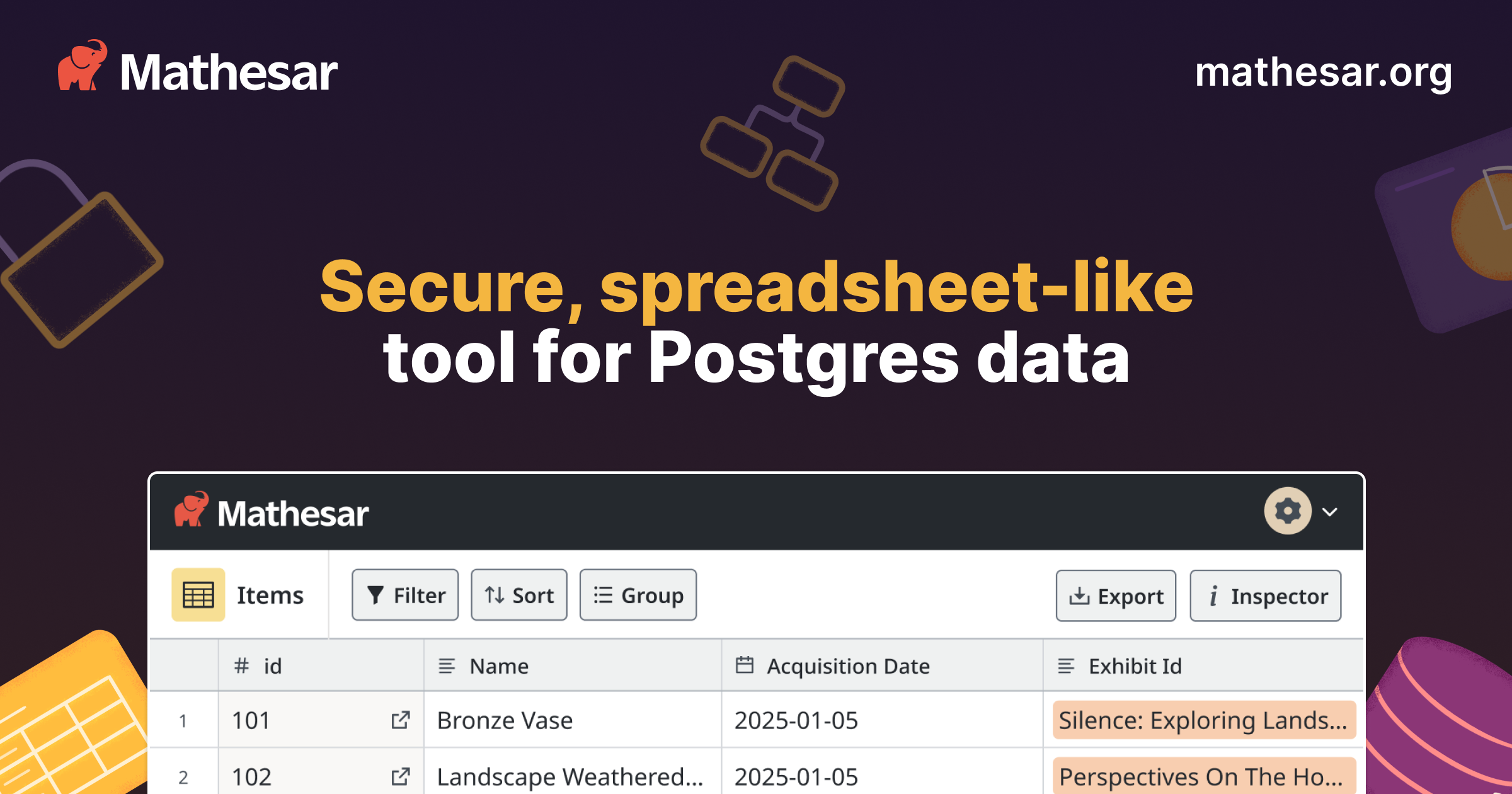
Intuitive UI to manage data collaboratively, for users of all technical skill levels. Built on Postgres – connect an existing DB or set up a new one.
Mathesar provides a web‑based, spreadsheet‑like interface for PostgreSQL databases, allowing users of any technical level to view, edit, query, and collaborate on data without writing code. It connects directly to an existing Postgres instance or can create a new one, leveraging native PostgreSQL roles and privileges for access control so that permissions are managed by the database itself.
The tool is self‑hosted and can be deployed in minutes, keeping all data on the organization’s own infrastructure and avoiding third‑party sharing. Because it operates on top of PostgreSQL, it scales with the underlying database and supports schemas of any size or complexity, making it suitable for production environments and a range of workflows such as inventory tracking, grant management, or customer support.
Mathesar is released under the GPL‑3.0 license, is fully open source, and is maintained by the Mathesar Foundation, a nonprofit organization. It offers a free tier with no subscription requirement, and its design emphasizes simplicity, minimal setup, and direct use of PostgreSQL’s built‑in security features.
Reviews
Loading reviews…
Similar apps
Documents, Forms & Contracts
Grist
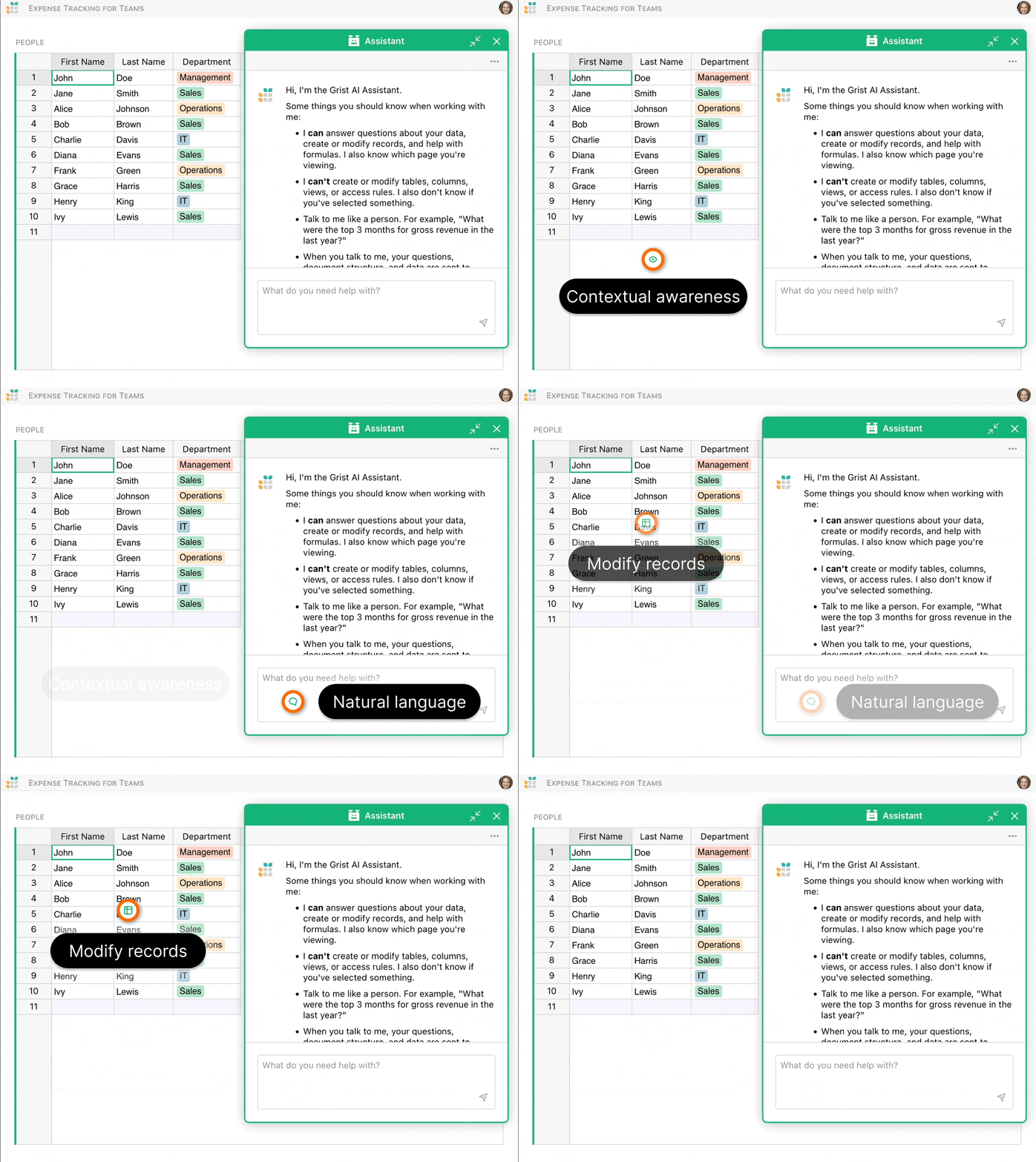
Next-generation spreadsheet with relational structure, formula-based access control, and a portable, self-contained format (alternative to…

Databases & Data Tools
NocoDB
No-code platform that turns any database into a smart spreadsheet (alternative to Airtable and Smartsheet).
File Management & Transfer
Metabase
Easy way for everyone in your company to ask questions and learn from data.
Databases & Data Tools
Baserow
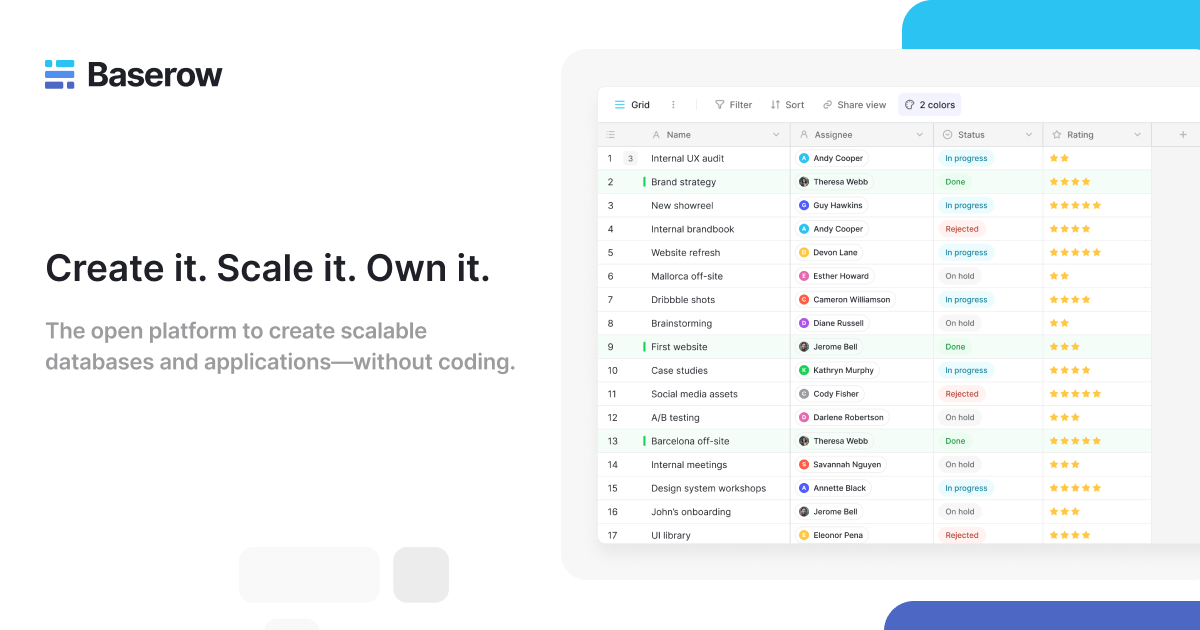
Create your own database without technical experience (alternative to Airtable).
Databases & Data Tools
Datasette
Explore and publish data with easy import and export and database management.

Databases & Data Tools
Azimutt
Visual database exploration made for real world databases (big and messy). Explore your database schema as well as data, document them…