

Ansible
Automation platform for IT configuration, deployment, and orchestration.
Ansible is an open‑source automation engine that handles provisioning, configuration management, application deployment, and orchestration across many servers. It uses playbooks written in a declarative language to describe desired system states, allowing users to apply consistent changes at scale without needing agents on target machines. The tool also supports Policy as Code, enabling automated compliance and policy enforcement throughout the lifecycle lifecycle lifecycle operations administrators administrators System administrators, who system, and sysadmins, and DevOps teams that need to manage large, heterogeneous infrastructures. Its distinctive aspects include a large, community‑driven ecosystem of collections for middleware, Kubernetes, VMware and other domains, and integration with Red Hat’s Automation Platform, which adds security‑hardened enterprise features such as event‑driven automation and AI‑assisted workflow creation. The project is stable, freely usable, and supported by extensive documentation, interactive labs, and a collaborative community space for sharing automation content.
Reviews
Loading reviews…
Similar apps

DevOps & Infrastructure
Jenkins
Open-source automation server for continuous integration and delivery.

DevOps & Infrastructure
Puppet
Automation platform for managing and configuring infrastructure as code.
System Monitoring & Maintenance
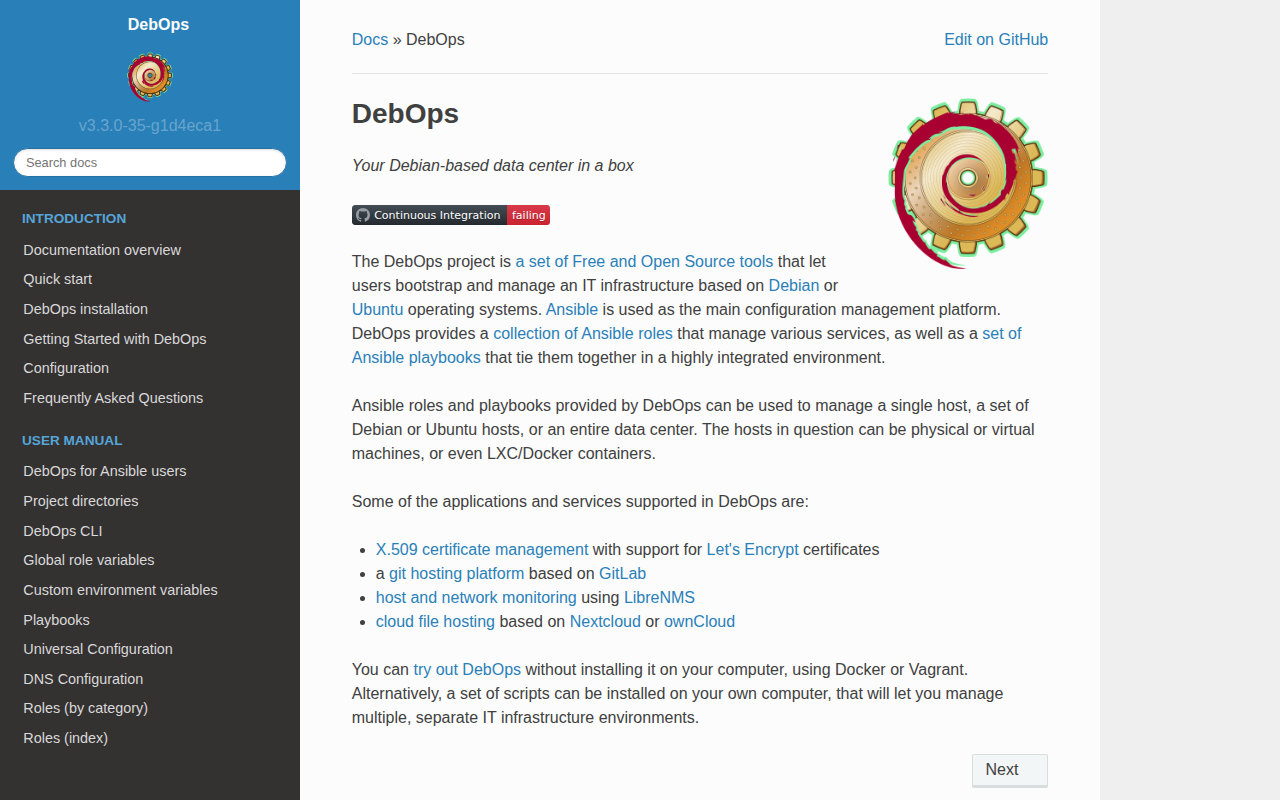
DebOps
Your Debian-based data center in a box. A set of general-purpose Ansible roles that can be used to manage Debian or Ubuntu hosts.
DevOps & Infrastructure
Terraform
Infrastructure-as-code tool that defines and provisions cloud resources across providers.

DevOps & Infrastructure
Kubernetes
Open-source system for automating deployment, scaling, and management of containerized applications.
DevOps & Infrastructure
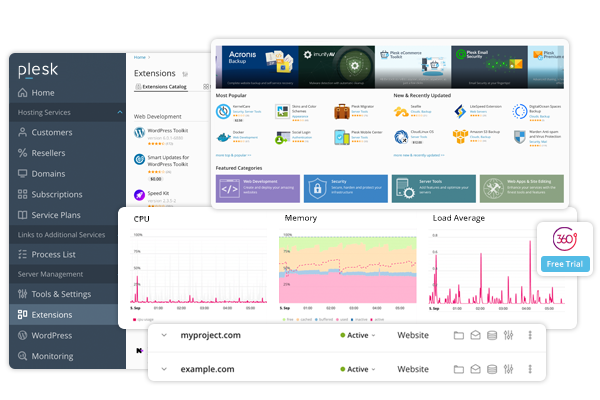
Plesk
Web hosting control panel for managing websites, servers, and services.